
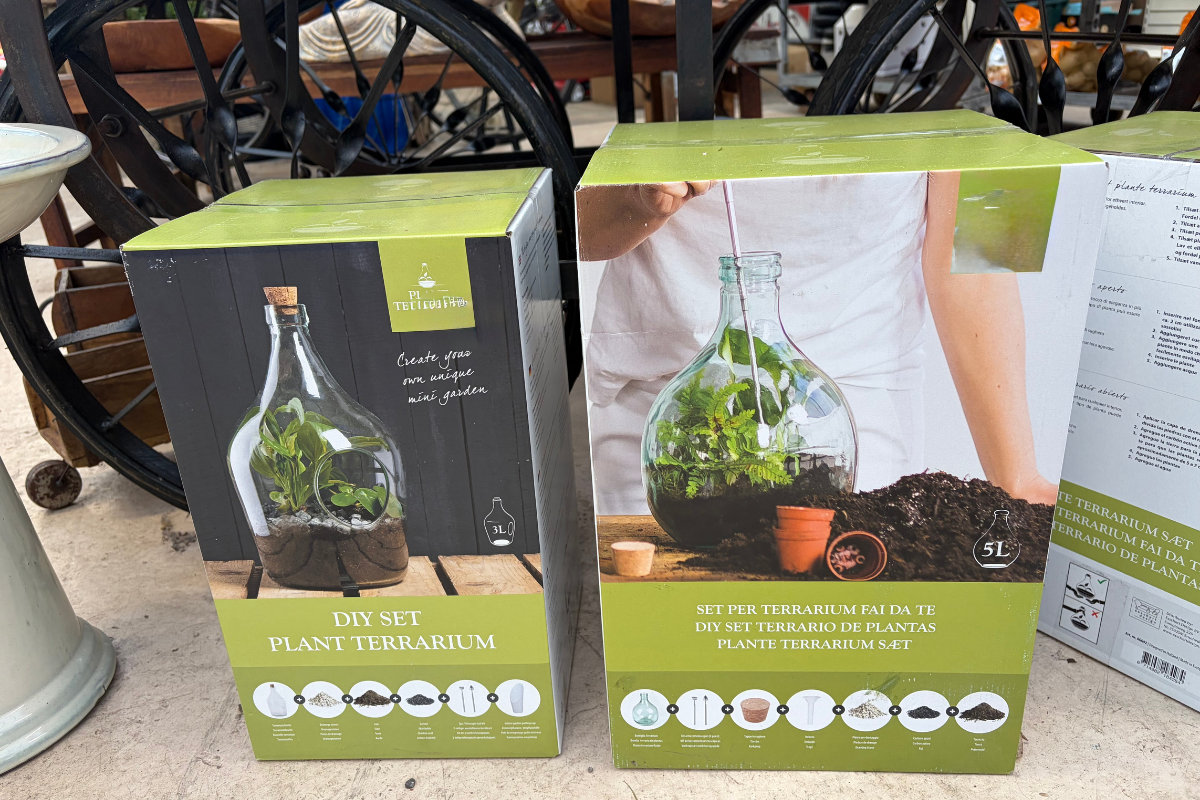
Terrariums have become one of the most popular indoor plant trends in recent years – and it’s easy to see why.
We love terrariums at Hildreth’s Garden Centre. These miniature gardens require surprisingly little maintenance, and look beautiful in any space, from kitchen shelves to office desks. Terrariums are also a wonderful way to connect with plants, even if you’re short on time or space. They’re calming, creative, and bring a little piece of the outdoors inside – something we all appreciate, especially during the darker months of the year.
We’ve seen a real rise in interest in terrariums too recently, especially from Hildreth’s customers looking for an easy way to enjoy plants at home or give a thoughtful, long-lasting gift. Whether you’re new to houseplants or a seasoned gardener, terrariums offer something a little bit magical.
What is a terrarium?
A terrarium is essentially a self-contained plant environment, usually created inside a glass container. There are two main types:
- Closed terrariums, which have a lid and create a humid, almost self-watering ecosystem
- Open terrariums, which are better suited to drier plants and need a little more attention
In the UK, closed terrariums are especially popular because they thrive indoors and suit our cooler climate and centrally heated homes. The key to a successful terrarium is choosing plants that enjoy similar conditions. For closed terrariums, look for plants that love humidity and grow slowly, such as:
- Mosses
- Small ferns
- Fittonia (nerve plant)
- Miniature ivy or peperomia
Open terrariums work better with plants that prefer drier air, such as small succulents or cacti, though these tend to be less forgiving if overwatered.
How to create a terrarium
Right now we have some cool terrarium kits but if you fancy starting from scratch and creating your own, its’s actually quote simple – also really fun, making it a great project for all ages.
Start with a clean glass container and add:
- A drainage layer – small stones or gravel
- A thin layer of activated charcoal – this helps keep the terrarium fresh
- Compost – a peat-free houseplant compost works well
- Plants – gently arranged, leaving room for growth
Finish with decorative touches like moss, bark, or stones, keeping things natural and uncluttered.
Caring for your terrarium
One of the biggest reasons terrariums are so popular is how low-maintenance they are.
- Light: Bright, indirect light is ideal. Avoid direct sunlight, which can overheat the glass.
- Watering: Less is more. Closed terrariums may only need watering every few months. If you see heavy condensation, simply remove the lid for a short time.
- Temperature: Normal room temperature is perfect. Keep away from radiators and draughts.
- Maintenance: Remove any yellowing leaves and trim plants occasionally to keep everything balanced.
A healthy terrarium should look fresh and lightly misted, not wet or fogged.
Are you following us on social yet? Don’t forget to sign up to our monthly newsletter and follow our socials for more news and offers.
Follow us on Instagram @hildreths.garden.centre on Facebook @Hildreths Garden Centre and TikTok @hildreths.gc
Join our Garden Club for 10% off your garden essentials! (Ts &Cs apply)
If you have time, please leave us a Google Review here. We’re independent and family-run so we’d really appreciate it.