

Whether cascading from hanging baskets, brightening up patio pots, or forming colourful drifts in borders, these hardy plants have earned their place in the nation’s horticultural heart. But what makes geraniums so special, and how can you get the best from them?
From the balcony boxes of flats to the cottage gardens, geraniums add charm, colour, and vitality. They’re part of our gardening culture – dependable, delightful, and always in bloom when we need them most. So if you’re looking for an easy win in the garden this summer, grab a few geraniums, pop them in a pot, and let them do their thing. You’ll be rewarded with a riot of colour and the warm satisfaction of a garden in full, glorious bloom.
Geraniums come in a stunning array of colours – from vivid reds and hot pinks to soft pastels and pure whites. Their long flowering season, from late spring well into autumn, ensures months of colour with very little fuss. They’re also remarkably easy to care for. They tolerate neglect better than many bedding plants and thrive in containers, window boxes, and garden beds alike. Their resilience makes them a top choice for both seasoned gardeners and beginners.
There are two main types often confused: Pelargoniums (what most people call geraniums) and true hardy geraniums (also known as cranesbills). Pelargoniums are the showy annuals we adore in summer pots, while hardy geraniums are perennial, spreading beauties perfect for filling shady corners and underplanting.
Growing geraniums successfully
Choosing the Right Variety
- Pelargoniums (Annual Geraniums): Ideal for pots and baskets. Not frost-hardy, so treat as annuals or overwinter indoors.
- Hardy Geraniums: Great for borders and shady spots. Come back year after year and require minimal care once established.
Planting Tips
- Soil: Geraniums prefer well-drained soil. Add compost to enrich borders or use a good-quality multi-purpose compost for containers.
- Location: Most geraniums love full sun, though hardy types can tolerate partial shade.
- Watering: Water regularly, especially in dry spells, but don’t let them sit in soggy soil – they hate wet feet.
Feeding and Deadheading
- Feed container-grown geraniums every 2–3 weeks with a high-potash fertiliser to encourage blooms.
- Regularly deadhead spent flowers to keep plants looking tidy and blooming longer.
Overwintering Pelargoniums
In the UK, pelargoniums won’t survive a frost. Either:
- Take cuttings in late summer to grow indoors over winter.
- Lift the whole plant, cut back, and store in a cool, bright spot indoors until spring.
- Treat them as annuals and replace each year.
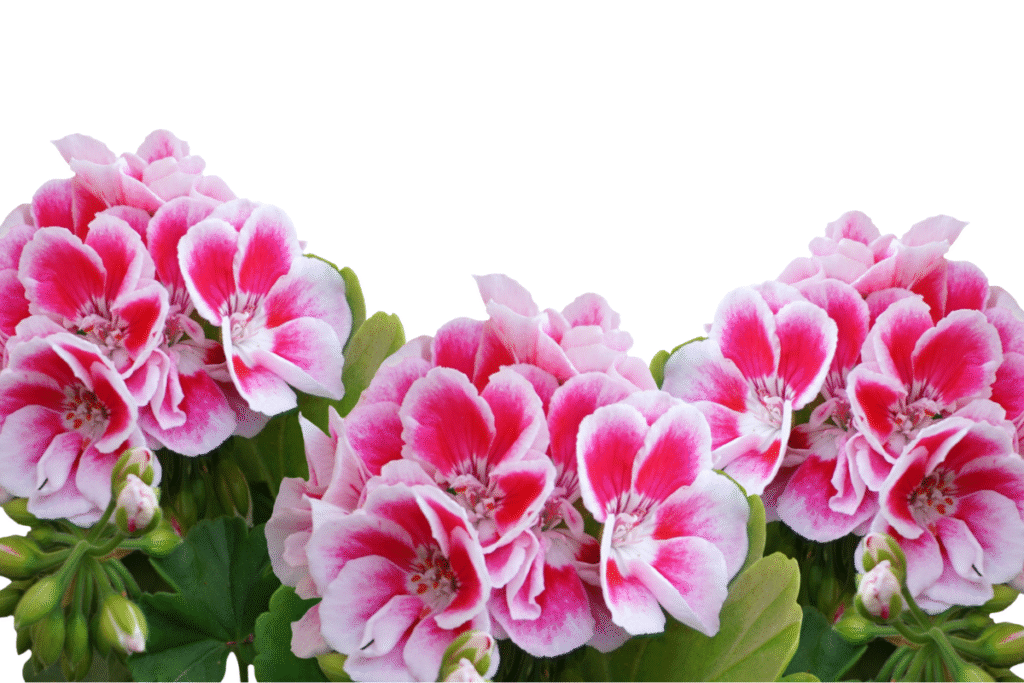
🌸 Companions for Pelargoniums (Tender/Bedding Geraniums)
Pelargoniums thrive in pots, hanging baskets, and sunny borders. Choose companions that like the same sunny, free-draining conditions.
Lobelia
- Why: Its trailing blue or white flowers create a lovely contrast with the bold colours of pelargoniums.
- Style Tip: Ideal for the edge of hanging baskets or containers.
Petunias
- Why: Their similar sun-loving nature and wide colour range make them a perfect visual match.
- Style Tip: Mix and match colours for a vibrant summer display.
Verbena
- Why: Compact varieties of verbena offer clusters of tiny blooms that fill in around geraniums beautifully.
- Bonus: Great for attracting pollinators.
Calibrachoa (Million Bells)
- Why: These mini-petunia-like plants cascade nicely and bloom continuously.
- Style Tip: Use them to soften pot edges or trail down walls.
Bacopa
- Why: Produces masses of small white, pink or blue flowers that complement pelargoniums without overpowering them.
🌿 Companions for Hardy Geraniums (Cranesbills)
Hardy geraniums work well in borders, woodland gardens, and under shrubs. They pair best with plants that share their need for well-drained soil and partial shade to sun.
Hostas
- Why: Their large, textured foliage contrasts beautifully with the dainty geranium flowers.
- Tip: Choose slug-resistant hosta varieties!
Ferns
- Why: Add elegant greenery and thrive in the same semi-shaded conditions.
- Perfect for: Woodland-style gardens.
Astrantia
- Why: A traditional cottage garden favourite that blooms around the same time and adds a romantic look.
Alchemilla mollis (Lady’s Mantle)
- Why: Soft green foliage and frothy lime flowers provide contrast and ground cover.
- Extra: Great at suppressing weeds.
Salvia nemorosa
- Why: Spikes of purple-blue flowers add vertical interest and attract bees.
- Style Tip: Choose dwarf varieties for balance.
Nepeta (Catmint)
- Why: Soft mounds of lavender-blue flowers create a dreamy contrast with hardy geraniums.
- Bonus: Drought-tolerant and pollinator-friendly.
Are you following us on social yet? Don’t forget to sign up to our monthly newsletter and follow our socials for more news and offers.
Follow us on Instagram @hildreths.garden.centre and on Facebook @Hildreths Garden Centre
If you have time, please leave us a Google Review here. We’re independent and family-run so we’d really appreciate it.