
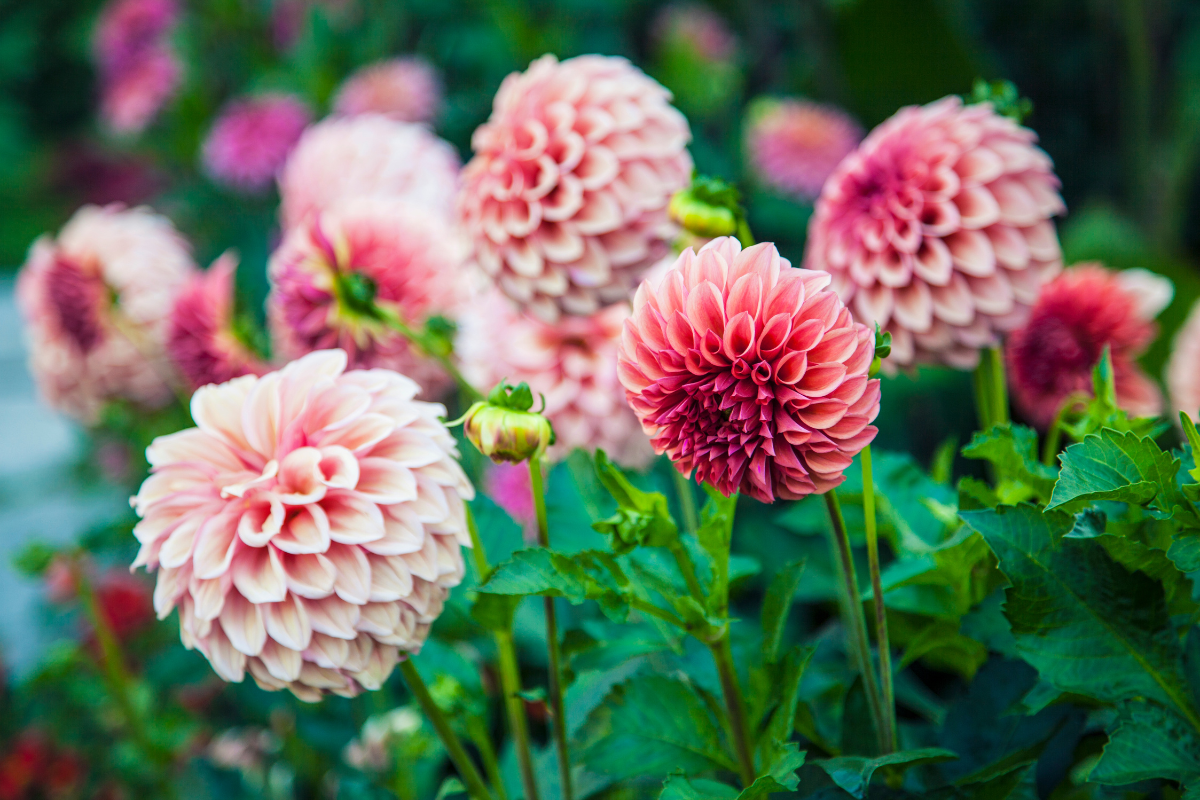
Dahlias are the undisputed royalty of the late-summer garden. With an almost infinite variety of colours, shapes, and sizes, they offer a spectacular floral firework display just as many other plants begin to fade.
Originally native to the high plains of Mexico and Central America, Dahlias were first cultivated by the Aztecs, who used the tubers as a food source and the hollow stems for water pipes.
They didn’t arrive in Europe until the late 18th century. Named after the Swedish botanist Anders Dahl, they were initially treated as a vegetable. However, once breeders realised how easily they hybridized, the focus shifted from the dinner plate to the flower bed. Today, there are over 50,000 registered varieties!
Popular types of dahlias for UK gardens
The Royal Horticultural Society (RHS) classifies dahlias into several groups based on their flower shape. Here are the most popular types you’ll find in UK garden centres- at Hildreth’s Garden Centre, we do our best to stock as varied a selection as possible.
- Cactus & semi-cactus: Feature narrow, pointed petals that look like spiked stars.
- Decorative: The classic ‘fluffy’ dahlia with broad, flat-tipped petals. Great for borders.
- Pompon & ball: Perfectly spherical, honeycomb-like blooms. They are incredibly hardy and excellent for cutting.
- Single-flowered: These have a single row of petals and an open centre, making them the perfect choice for bees and pollinators.
- Dinner plate: Not a formal classification, but a common term for varieties like ‘Emory Paul’ that produce blooms up to 30cm wide.
Your dahlia planting calendar: Timing is everything
To get the most out of your dahlias in the UK’s unpredictable climate, following a seasonal timeline is key for success.
- March to April: Start Tubers Indoors If you have a greenhouse, conservatory, or even a sunny windowsill, pot your tubers up in early spring. This “wakes them up” early, giving you flowers weeks sooner than if you waited for the ground to warm up.
- May to June: The Big Move Outside Patience is a virtue here. Only plant your dahlias out in the garden once the final risk of frost has passed. In the south of England, this is usually mid-May; in Scotland or the North, wait until early June.
- July to October: The Flowering Season This is when the magic happens! Dahlias will bloom continuously throughout the summer. The more you “deadhead” (cut off the spent flowers), the more the plant will produce.
- Late October to November: The First Frost Once a heavy frost hits, the foliage will turn black and limp. This is your signal to either mulch them heavily for protection or lift the tubers to store them in a frost-free shed for winter.
The best compost and soil
Dahlias are ‘hungry’ plants that need a rich, well-draining environment to thrive.
- For Pots: Use a high-quality peat-free multi-purpose compost mixed with a little horticultural grit for drainage.
- In the Ground: Dig in plenty of well-rotted garden compost or manure a few weeks before planting.
- pH Level: They prefer a slightly acidic to neutral soil (around pH 6.0–7.5).
Step-by-step growing tips
Planting Depth: Plant your tubers about 10–15cm deep. Ensure the ‘eye’ (the little bud where the stem grows) is pointing upwards.
Staking: If you’re growing decorative or cactus types, stake them at the time of planting. They grow fast and get heavy; trying to stake a 4-foot plant in a rainstorm is a recipe for snapped stems!
The ‘Pinch’: When your plant reaches about 20cm high, pinch out the main growing tip. This encourages the plant to branch out, resulting in a bushier plant with more flowers.
Watering & Feeding: Keep them moist but not sodden. Once flowers appear, feed every two weeks with a high-potash liquid feed (like tomato food) to keep the blooms coming.
Overwintering in the UK
Because the UK has damp, cold winters, dahlia tubers can rot if left in the ground.
In the South: You can often get away with leaving them in the ground if you cover them with a thick (15cm) mulch of bark or compost.
In the North: It is safer to lift them. Once the frost blackens the foliage, dig up the tubers, cut the stems back, and store them upside down in a cool, frost-free place (like a shed) in dry sand or sawdust.
Gareth from Hildreth’s Top Tip: Watch out for slugs! Young dahlia shoots are like caviar to slugs and snails. Use organic pellets, wool pellets, or beer traps as soon as you see green shoots breaking the soil.
Are you following us on social yet? Catch more tips from Gareth there! And don’t forget to sign up to our monthly newsletter and follow our socials for more news and offers.
Follow us on Instagram @hildreths.garden.centre on Facebook @Hildreths Garden Centre and TikTok @hildreths.gc
Join our Garden Club for 10% off your garden essentials! (Ts &Cs apply)
If you have time, please leave us a Google Review here. We’re independent and family-run so we’d really appreciate it.