
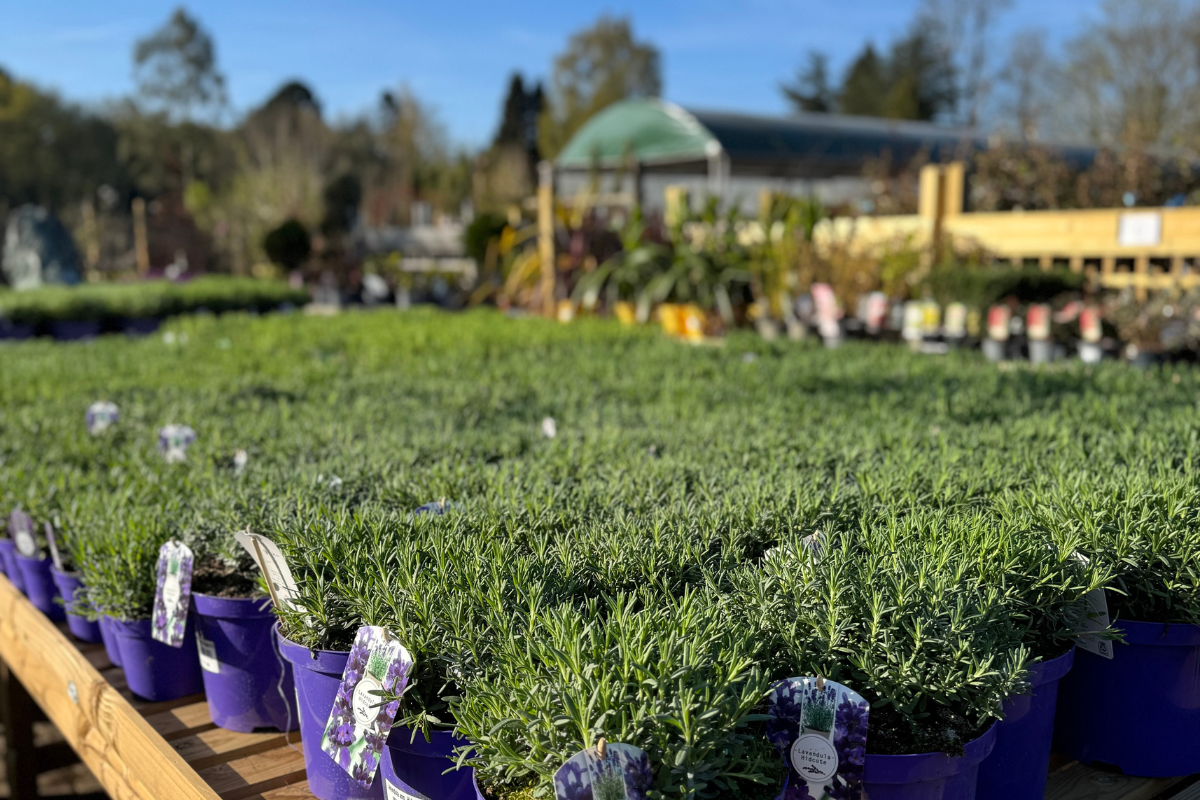
Lavender is a quintessential part of the British garden. With its fragrant blooms, silvery foliage, and ability to attract pollinators, it’s no wonder this Mediterranean native has become a firm favourite.
Did you know there are over 45 species and hundreds of varieties of lavender? In this guide, we’ll explore the most popular types grown in the UK and share essential tips on how to care for them throughout the year. Generally, the best time to plant lavender is spring (March to May) when the soil is warming up and before the peak of summer heat. This gives roots time to establish before winter sets in.
Lavender isn’t just lovely for us either, it’s a magnet for bees and butterflies. Adding lavender to your garden helps support pollinators, especially in urban areas.
English Lavender (Lavandula angustifolia) Despite its Mediterranean origins, English lavender is perfectly suited to the UK’s cooler, wetter climate. It’s hardy, evergreen, and known for its sweet fragrance. It’s best for borders, hedging, dried flowers, and culinary use and popular varieties include
- Hidcote – Compact and deep purple flowers, ideal for borders and edging.
- Munstead – Slightly paler than Hidcote, but very fragrant and early flowering.
Lavandin (Lavandula x intermedia) A hybrid between English and Portuguese lavender, lavandin is larger and more robust than English lavender. It’s ideal for large borders, landscaping, and cut flowers, produces long flower spikes and has a stronger, slightly more medicinal scent. Popular varieties are:
- Grosso – Tall with deep violet flowers, often used in essential oil production.
- Provence – Lush and bushy, perfect for a French countryside feel.
French Lavender (Lavandula stoechas) Recognised by its quirky ‘bunny ear’ bracts atop the flower heads, French lavender adds a splash of whimsy to containers and borders and is perfect for patio pots, feature plants, and ornamental use. However it’s more delicate than other types and prefers milder winters. French lavender may need protection during frosts, so consider overwintering in a greenhouse or placing pots against a sheltered wall. Popular varieties are:
- Papillon – A popular choice for pots, with bright purple “ears.”
- Tiara – Unique with pale blooms and a slightly fruity scent.
Lavender Care Tips for the UK Climate
Lavender is generally low-maintenance, but a few key steps will keep it thriving in British gardens. Location is important. Lavender loves full sun, so aim for at least six hours of direct sunlight a day if you can, even in the cooler north. A south-facing spot is ideal.
Free-draining soil is also essential. If you have heavy clay soil, improve drainage by adding grit or planting in raised beds or pots. Lavender dislikes sitting in wet roots. It’s a plant that’s usually drought-tolerant once established. Water new plants regularly during their first summer, but after that, only water during extended dry spells.
To keep your lavender plants bushy and prevent them from becoming woody:
- English & Lavandin: Lightly prune after flowering (August) and give a harder prune in early spring.
- French lavender: Prune lightly after flowering. Avoid cutting into old wood.
Are you following us on social yet? Don’t forget to sign up to our monthly newsletter and follow our socials for more news and offers.
Follow us on Instagram @hildreths.garden.centre and on Facebook @Hildreths Garden Centre