
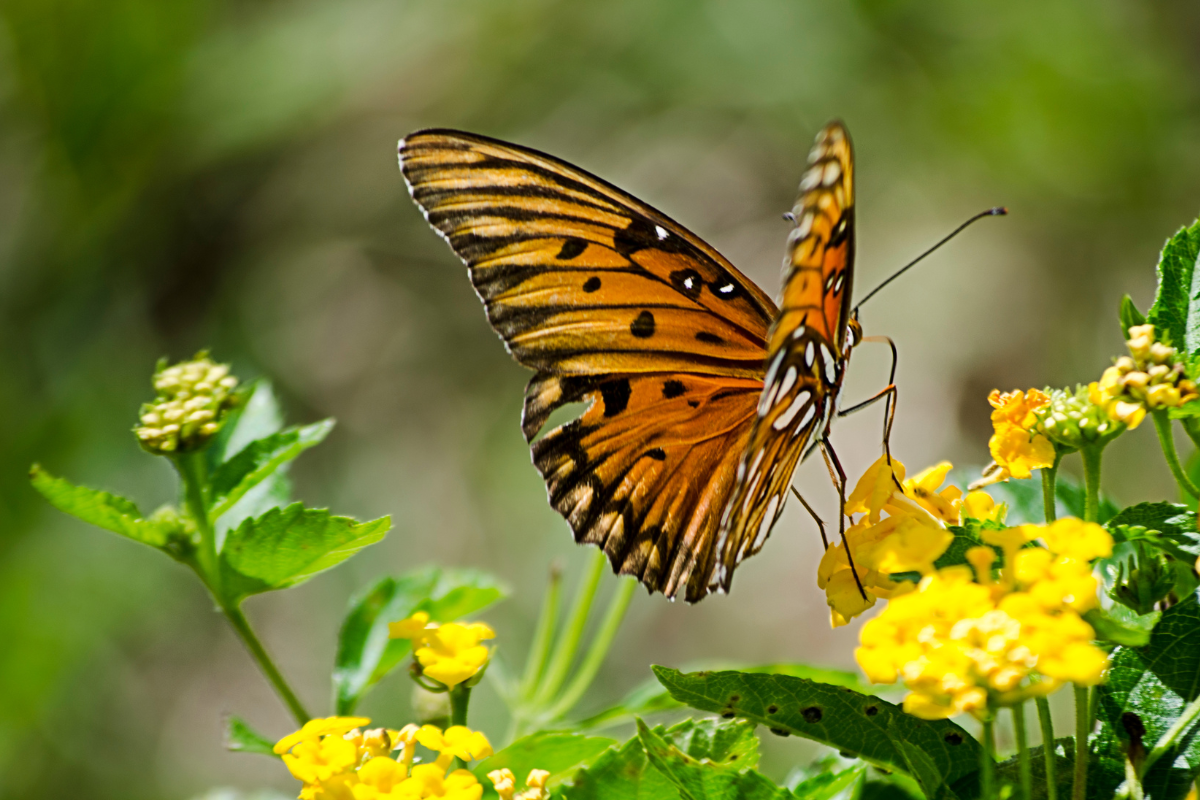
Butterflies bring beauty and life to any garden, and they’re also essential pollinators and indicators of a healthy environment. With a few thoughtful choices, your garden can become a safe haven for these delicate pollinators.
Butterfly Education and Awareness Day (BEAD) 2025 takes place on June 7th. This annual event, organised by the Association for Butterflies, aims to raise awareness about butterfly conservation and the importance of these beautiful insects.
Sadly, many butterfly species in the UK have seen a decline in recent years due to habitat loss, pesticide use, and climate change. This is bad news for them- and us. Butterflies aren’t just pretty visitors – they play a crucial role in our ecosystems. As they feed on nectar, they pollinate flowers, helping fruits and vegetables to grow. Their presence also indicates a healthy, balanced garden environment.
Creating a butterfly-friendly garden doesn’t require a total makeover – just a little intentionality. By planting the right flowers, providing food and shelter for caterpillars, and avoiding harmful chemicals, you can turn your garden into a thriving butterfly sanctuary. The reward? A vibrant, fluttering burst of colour that brings joy to you and life to your local ecosystem.
Here are some easy and effective ways to welcome butterflies into your outdoor space:
Grow nectar-rich flowers
Butterflies feed on nectar, so planting flowers they love is key. Choose a variety of plants that bloom from early spring through late summer. Group flowers together so butterflies can feed more efficiently, and try to plant in sunny, sheltered spots—they love warmth and calm air.
Great UK-friendly options include:
- Buddleia (Butterfly Bush)
- Verbena bonariensis
- Lavender
- Echinacea (Coneflower)
- Sedum
- Red valerian
- Marjoram and thyme (also great for bees)
Include caterpillar food plants
Attracting butterflies is only half the battle – supporting their full life cycle is even better. Many butterflies are picky about where they lay their eggs, so include plants their caterpillars will eat:
- Nettles (Small Tortoiseshell, Peacock)
- Bird’s-foot trefoil (Common Blue)
- Garlic mustard and cuckooflower (Orange-tip)
- Holly and ivy (Holly Blue)
Tuck these into a wild corner if you’re short on space or want to keep things neat. Try to avoid pestcides – even ‘natural’ sprays can be harmful to butterflies at various stages of life. Encourage natural predators like birds, ladybirds, and frogs to manage pests instead.
Create shelter and resting spots
Butterflies need sunny places to bask and sheltered areas to rest. Add flat stones for sunbathing, and consider letting part of your lawn grow long or keeping a hedge as a windbreak. Dense shrubs, hedgerows, or even a log pile can serve as a safe resting place.
Provide water and mud
Butterflies also need water and minerals. A shallow dish with moist sand or muddy patches can serve both purposes. You’ll often see butterflies “puddling” – absorbing minerals and moisture from wet ground.
Our top butterfly conservation tips!
Even a small garden can make a difference when part of a larger patchwork of butterfly-friendly spaces across the UK. Here are a few more ways you can help:
- Record your sightings with organisations like Butterfly Conservation.
- Join No Mow May and allow wildflowers to flourish.
- Leave leaf litter in autumn – many species overwinter in leaves or as pupae.
- Educate others – a neighbourhood full of butterfly gardens is even more powerful.
Are you following us on social yet? Don’t forget to sign up to our monthly newsletter and follow our socials for more news and offers.
Follow us on Instagram @hildreths.garden.centre and on Facebook @Hildreths Garden Centre