
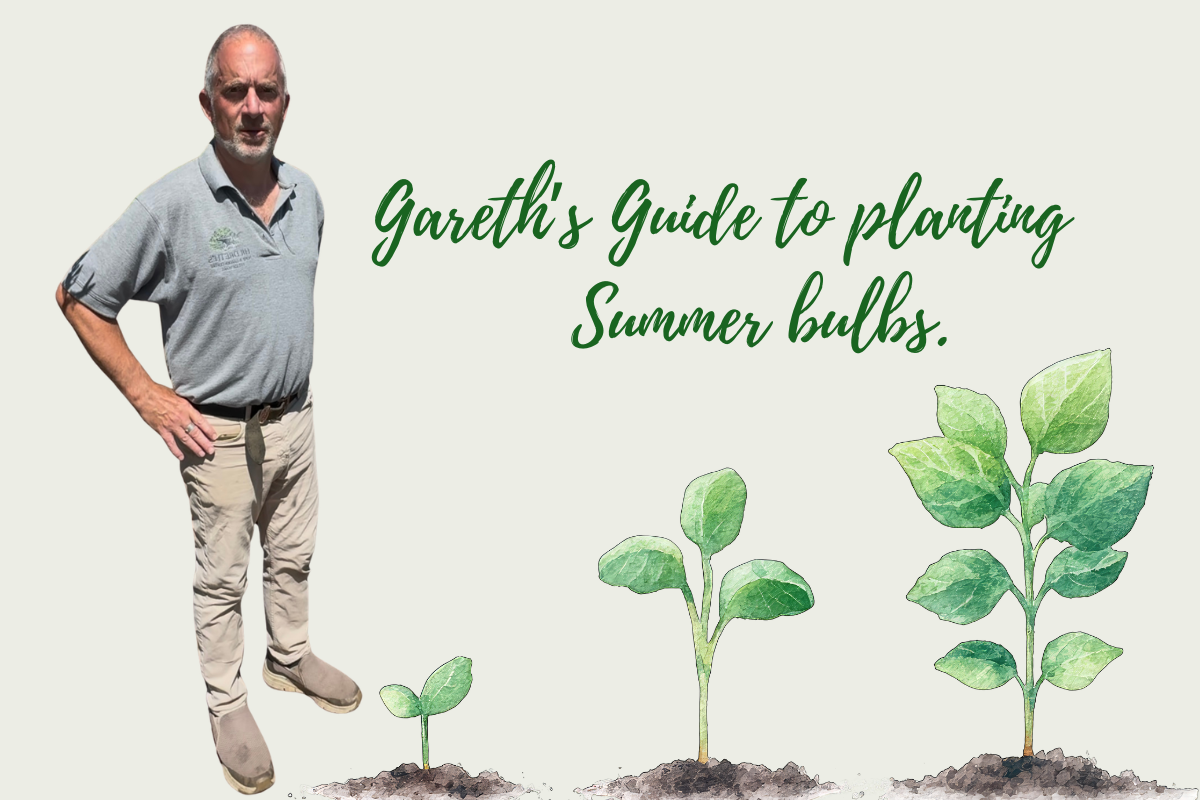
As part of his gardening series our Hildreth’s in-house expert, Gareth, is sharing his advice on Summer bulb planting. It’s time to start!
It’s still pretty miserable outside and, apart from the odd snowdrop, nothing much is happening in the garden. At this time of the year, it’s vital you plan ahead and I think one of the most important jobs on any gardener’s list should be planting summer-flowering bulbs. These are widely available in the garden centre having arrived in early January.
What is a bulb?
Although bulbs exist (they’re described as short, underground stems with fleshy leaf bases or scales that act as food storage organs during dormancy), the term is also used generically and covers similar structures such as corms, tubers and rhizomes. Check out the ‘bulbs’ at your garden centre and you’ll also find a wide variety of perennials that can be planted now either in borders or containers.
Some of the showiest bulbs are lilies and these are really simple to look after. Hardy, they can be planted direct in the garden (they require moist, well-drained soil in a sunny position) or into containers, particularly if you’re choosing shorter varieties, as these stand well in pots. We have quite a wide selection of lilies at the garden centre. I recommend growing them in containers and positioning these in existing borders to add welcome splashes of colour. Taller varieties might require support and most would benefit from being planted in deep containers.
If in doubt about which varieties to plant choose shorter cultivars as these are less likely to require staking. Plant the bulbs at a depth that’s equal to the height of the bulb adding plenty of crocks at the base and using John Innes No 3 compost. Other summer-flowering bulbs that are worth planting include ixia, which have delightful flowers. They’re a native of South Africa and enjoy sunnier climes so aren’t fully hardy. Grow them in containers under cover until all danger of frost has passed. A showier plant but one that’s completely hardy is Amaryllis belladonna, the Jersey lily. It bears charming, trumpet-shaped, sweetly scented flowers in late summer. Plant it in clumps in a sunny position near the back of a border.
What are corms?
Corms are another type of storage organ, and are similar to bulbs because they also have a protective tunic. The most commonly grown plant that’s produced from corms is the begonia. The corms are small, furry and brown yet produce magnificent plants that flower all summer long. Ideal in a shady corner. There’s quite a selection available. Start them indoors in March, placing them concave side up in pots of moist compost, then transplant them outside in May, once all danger of frost has passed.
In a typical cottage garden setting, the most obvious corm-producing plants are crocosmia. These hardy perennials produce vibrant, fiery coloured blooms during summer and multiply rapidly producing corms, in a vertical chain, one above another. Usually, only the uppermost corm flowers in any one season.
Gladioli, popular summer-flowering perennials that were so loved by Dame Edna Everidge are grown for their dramatic spikes of flowers. These plants enjoy full sun and moist, well-drained soil and, as a stalwart of many cottage gardens, are often grown as a cut flower.
What about tubers?
Cyclamen don’t produce corms, they rely instead on tubers – nutrient-storing organs that help it survive and reproduce. The most common types of cyclamen are Cyclamen coum and Cyclamen hederifolium, both are hardy and enjoy a woodland setting. C hederifolium blooms in autumn while C coum flowers between January and March (and is so named because it has ivy-like leaves). Also grown from tubers are dahlias, one of the most popular flowers in the summer garden. There’s an incredible range of varieties available, and you’ll find a wide selection in the garden centre.
One of my Summer favourites…
Dahlias aren’t hardy so can’t be planted out until all danger of frost has passed. Simply start them off inside in a tray of compost and watch the growing points as they emerge. Plant them out in May as the weather improves. Similar in many ways is Cosmos atrosanguineus, a native of Mexico. It’s a must for many gardeners, especially those who love chocolate because the velvety maroon flowers smell strongly of chocolate. If you’re a bit of a chocoholic, you’ll be hooked. They’re available now as tubers, or you can wait until plants arrive at the garden centre during the summer.
Cannas are one of the most tropical-looking plants you can grow and, with its common planting partner, the banana, Musa basjoo, they will create a real jungle vibe in the garden. They’re easily grown from rhizomes but these underground stems aren’t hardy in the UK so can only be planted out in late May. Similar in appearance are zantedeschia – these wonderful exotic-looking plants produce large, fluted flowers in a wide range of colours. Some are hardy but most should be kept frost free
Nerine bowdenii, the Guernsey lily, produces clusters of vivid cerise, white and red flowers atop leafless stems. It loves a sunny spot, preferably in a gravel bed against a sunny, south-facing wall. It adds welcome colour as summer fades.
Are you following us on social yet? Catch more tips from Gareth there! And don’t forget to sign up to our monthly newsletter and follow our socials for more news and offers.
Follow us on Instagram @hildreths.garden.centre on Facebook @Hildreths Garden Centre and TikTok @hildreths.gc
Join our Garden Club for 10% off your garden essentials! (Ts &Cs apply)
If you have time, please leave us a Google Review here. We’re independent and family-run so we’d really appreciate it.