
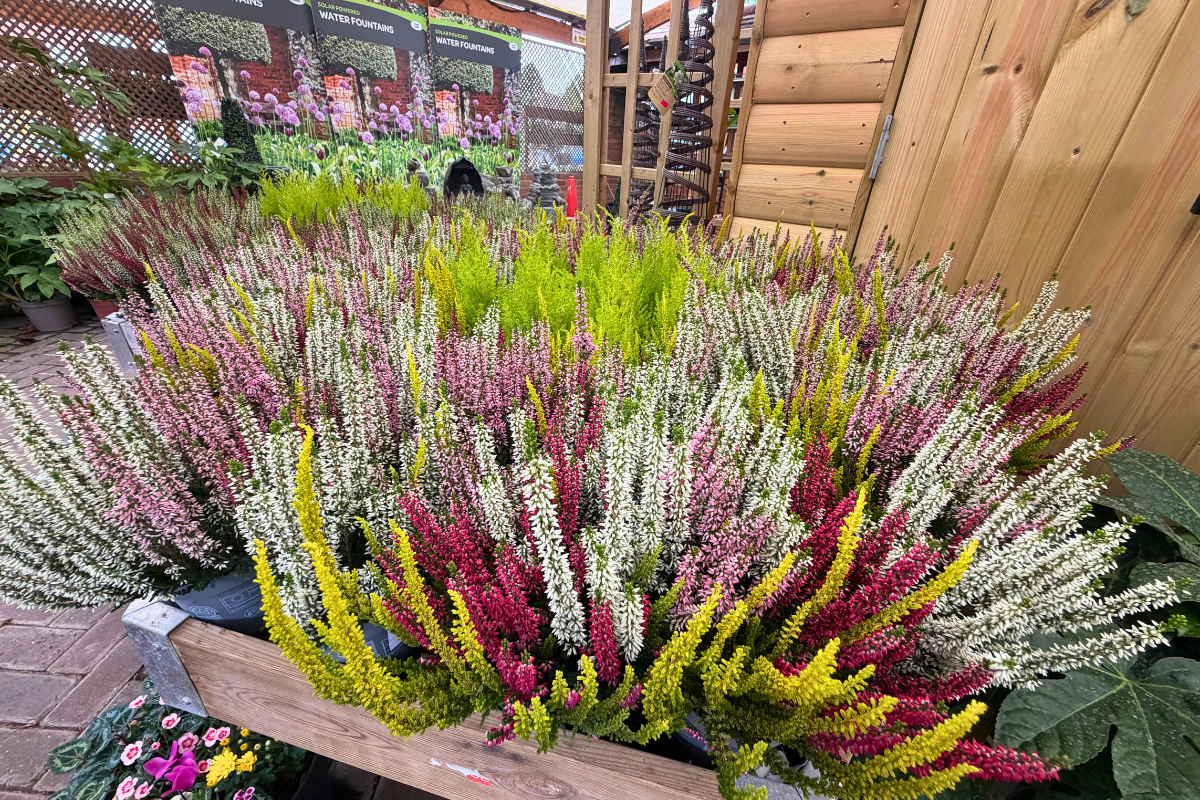
If your garden is losing its summer colour, September is the perfect time to bring it back – and heathers are one of our favourite ways to do it.
At Hildreth’s, we’ve got a gorgeous selection of heathers in as we hit the middle of September, in beautiful shades of pink, purple, mauve, red and white, as well as foliage that can add plenty of interest too. They’re colourful, compact, hardy and wonderfully easy to look after, making them a brilliant choice for UK gardens.
And while they’re often thought of as an autumn and winter plant, heathers can provide colour at different times of the year – it all depends on the varieties you choose.
Why are heathers such a good choice for UK gardens?
There’s a lot to love about heathers.
For starters, they’re hardy evergreen plants, so they continue to provide structure and colour even when many other plants have finished flowering and the garden is beginning to look a little bare. They’re also compact, which makes them incredibly versatile. They can be planted along the front of borders, used as ground cover, grouped together to create a colourful display, or grown in pots and containers on patios, balconies and doorsteps.
And then there are the flowers. Those masses of tiny bell-shaped blooms might be small, but when a heather is covered in them, the overall effect is anything but!
They’re also a great choice if you’re keen to make your garden more wildlife-friendly. Heather flowers are rich in nectar and are particularly useful to bees, with winter-flowering varieties providing an important source of food when there is much less else in flower.
Where you should plant heathers
Most heathers are happiest in a sunny spot, where they’ll produce their best flowering and, in many varieties, the strongest foliage colours. They can also cope with light or partial shade, so they’re quite adaptable, but avoid very deep shade or areas where the soil stays wet.
Good drainage is particularly important. Heathers naturally grow in relatively free-draining conditions, so they don’t enjoy sitting in soggy soil.
They’re lovely planted in:
- The front of borders
- Rockeries
- Gravel gardens
- Along paths and edges
- Sloping areas
- Large groups for a carpet of colour
- Wildlife-friendly planting schemes
- Pots and containers
For maximum impact, try planting several different colours together. A mix of pinks, purples and whites can look particularly lovely, or choose one colour and plant a group together for a stronger, more contemporary look.
What soil do heathers need?
This is one thing worth checking before you plant.
Many popular heathers prefer acidic, lime-free soil, so they’re not always the easiest choice for gardens with chalky or alkaline soil. If you’re gardening in the Chilterns, it’s worth checking your soil’s pH before planting, as local soil can vary considerably.
If your soil isn’t suitable, don’t worry – this is where containers really come into their own. Heathers that need acidic conditions can be grown beautifully in peat-free ericaceous compost instead.
There are also heathers, including some Erica varieties, that are more tolerant of neutral or alkaline soils, so it’s always worth checking the label when choosing your plants.
How to plant heathers
Planting heathers is nice and straightforward, and September is a great time to get them in the garden while the soil is still relatively warm.
1. Choose your position
Pick a sunny or lightly shaded spot with good drainage.
2. Prepare the soil
Remove weeds and loosen the soil. If your chosen variety needs acidic soil, make sure the planting area is suitable. Adding organic matter can also help improve the soil structure.
3. Give them some space
Think about the eventual size of your heathers when planting. If you’re planting several together, leave enough room for them to grow without becoming overcrowded.
4. Plant at the same depth
Place the plant in the ground so that the top of the root ball is roughly level with the surrounding soil.
5. Water well
Give your newly planted heather a really good drink after planting and keep it watered while it establishes.
Autumn planting can be particularly useful because the cooler conditions and naturally wetter weather mean plants can settle in before next summer.
Can you grow heathers in pots and containers?
Absolutely – and they look fantastic!
In fact, heathers are one of our favourite plants for autumn and winter containers because they bring colour when summer bedding is beginning to fade.
They’re particularly useful for patios, balconies, front doors and smaller gardens, where you might not have much room for planting directly into the ground. The RHS also recommends heathers as excellent container plants because of their compact habit.
Choose a container with good drainage and use peat-free ericaceous compost for varieties that require acidic conditions.
You can plant a single heather in a pot for a simple, understated look, or create a seasonal container by combining several heathers in contrasting colours with other autumn favourites.
Try pink heathers with silver foliage, for example, or combine purple and white for a classic look.
Just remember that plants in containers dry out more quickly than those growing in the ground, so they will need regular watering, particularly during dry spells.
How to look after heathers
One of the best things about heathers is that they don’t demand a lot of attention.
Watering
Newly planted heathers should be watered regularly while they establish, particularly during dry weather.
Once established in the garden, many heathers are relatively drought tolerant. Those growing in pots will need more regular watering because containers dry out much more quickly.
Feeding
Heathers generally don’t need lots of feeding, particularly when they’re growing happily in suitable acidic soil.
If you’re growing acid-loving varieties in containers, an ericaceous fertilizer can be used during the growing season, following the instructions on the packet.
Pruning
After flowering, give your heathers a light trim to remove the faded flower spikes and help keep the plants neat and bushy.
One important point: don’t be tempted to cut old, woody heathers right back into bare wood. They don’t always regenerate from old wood, so a light annual trim is much better than a dramatic haircut!
A little colour can go a long way…
One of the reasons we love heathers at this time of year is that you don’t need a huge garden to make an impact.
A few pots around a front door can instantly give your entrance a seasonal lift. A row of heathers along the front of a border can add colour that carries on through autumn and winter. Or plant a group together to create a beautiful patchwork of pinks, purples, whites and foliage shades.
They’re easy, hardy, good for pollinators and suited to everything from traditional cottage gardens to much more contemporary planting schemes.
And with a gorgeous selection of colours available at Hildreth’s now, September is a great time to choose your favourites.
Are you following us on social yet? Catch more news and tips there! And don’t forget to sign up to our monthly newsletter and follow our socials for more news and offers.
Follow us on Instagram @hildreths.garden.centre on Facebook @Hildreths Garden Centre and TikTok @hildreths.gc
Shop our BBQs and premium garden furniture online at www.garden-space.co.uk
If you have time, please leave us a Google Review here. We’re independent and family-run so we’d really appreciate it.