
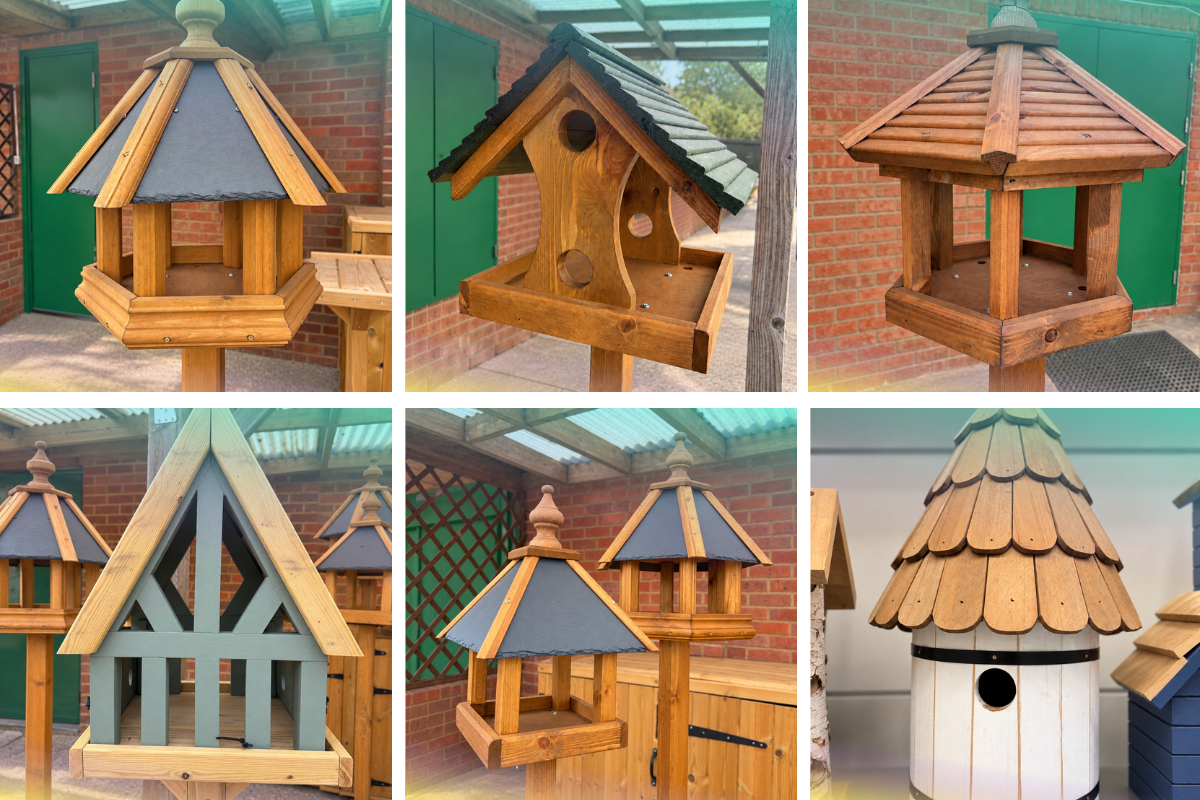
Discover why bird tables and nesting boxes are great for UK garden birds, plus tips on feeding, nesting, water and creating a wildlife-friendly garden.
Our gardens can be incredibly important spaces for Britain’s garden birds. As natural nesting sites and sources of food become harder to find, even a relatively small garden can make a difference.
One of the easiest ways to encourage more birds into your garden is to provide two things they need most: food and somewhere safe to shelter and nest.
That’s where bird tables and nesting boxes come in. And Hildreth’s can help you with both!
Why put a bird table in your garden?
A bird table provides a reliable place for wild birds to find supplementary food, particularly at times of year when natural food can be harder to come by.
Different birds have different tastes, so offering a variety of suitable foods can attract a surprisingly wide range of visitors! Sunflower hearts are popular with many garden birds, while suet, peanuts and mealworms can provide a valuable source of energy. Ask our Hardware team if you need pointing in the right direction.
You might find blue tits, great tits, robins, house sparrows, starlings, blackbirds and finches visiting – although exactly who turns up will depend on where you live and what you offer. And, of course, there’s the simple pleasure of just watching them.
What should you feed garden birds?
Good-quality bird food is the best place to start. Sunflower hearts are an excellent all-round choice, while suet products provide valuable high-energy food. You can also offer mealworms, particularly for insect-eating species such as robins.
It’s worth remembering that supplementary feeding should ideally sit alongside a garden that provides natural food too? Seed-producing plants, berrying shrubs, trees and insect-friendly flowers all help create a garden where birds can forage for themselves.
Why are nesting boxes important?
Food is only part of the picture. Birds also need safe places to raise their young, and suitable natural nesting sites aren’t always easy to find. Older trees with holes and cavities can provide ideal nesting spots, but these aren’t present in every garden. A well-designed nesting box can provide an alternative.
Different birds have different nesting habits, so the type of box you choose matters. Blue tits and great tits, for example, are cavity nesters and use boxes with a suitable entrance hole, while robins and wrens prefer more open-fronted designs.
Putting up a few different types of nesting box can therefore give you the opportunity to attract different species.
Where should you put a nesting box?
Location is important! Choose somewhere relatively quiet and sheltered, away from areas where cats or other predators can easily reach it. Avoid placing the box somewhere that gets strong, direct sunlight for much of the day, as it can become excessively hot inside.
A box should also be positioned securely and at a suitable height for the species you’re hoping to attract. And don’t worry if a new nesting box isn’t occupied straight away. Birds can take time to discover and start using a new box, so give it a chance!
Do birds use nesting boxes in winter?
Yes they do! While nesting boxes are particularly associated with spring and the breeding season, some birds will use them as sheltered roosting spots during colder months. So, putting a box up isn’t only about providing somewhere to raise chicks. It can provide useful shelter throughout the year.
If you’re buying a nesting box in autumn or winter, there’s no need to wait until spring to put it up. Giving birds time to discover it before the breeding season can be worthwhile.
Don’t forget the bird bath…
If you’re creating a bird-friendly garden, water is just as important as food. A shallow bird bath or wildlife-friendly water bowl gives birds somewhere to drink and bathe. Keep it topped up with fresh water and clean it regularly. You’ll often find that once birds discover a reliable water source, it becomes a very popular part of the garden!
Create a garden that birds want to visit
Bird tables and nesting boxes are a great starting point, but the best bird-friendly gardens offer much more than supplementary food and somewhere to nest. Think about planting shrubs that produce berries, leaving some seed heads standing through autumn and winter, growing flowers that attract insects and maintaining hedges or trees that provide shelter.
Even a slightly untidy corner can be useful. Fallen leaves, seed heads and dense planting can all provide food and hiding places for insects – which in turn provide food for birds. You don’t need to transform your entire garden into a wildlife reserve by the way! But a few thoughtful additions can make a real difference.
Bring more birds into your garden
Whether you’re hoping to attract your first blue tit, provide a nesting spot for a pair of robins or simply enjoy a little more wildlife from your kitchen window, bird tables and nesting boxes are an easy place to start.
Choose the right food, provide a clean source of water, add some natural planting and give birds somewhere safe to nest, and your garden can become a welcoming stop-off for local wildlife throughout the year. And once you start recognising the individual visitors to your garden, you may find yourself becoming just a little bit obsessed with who’s coming in for breakfast!
Are you following us on social yet? Catch more news and tips there! And don’t forget to sign up to our monthly newsletter and follow our socials for more news and offers.
Follow us on Instagram @hildreths.garden.centre on Facebook @Hildreths Garden Centre and TikTok @hildreths.gc
Shop our BBQs and premium garden furniture online at www.garden-space.co.uk
If you have time, please leave us a Google Review here. We’re independent and family-run so we’d really appreciate it.