
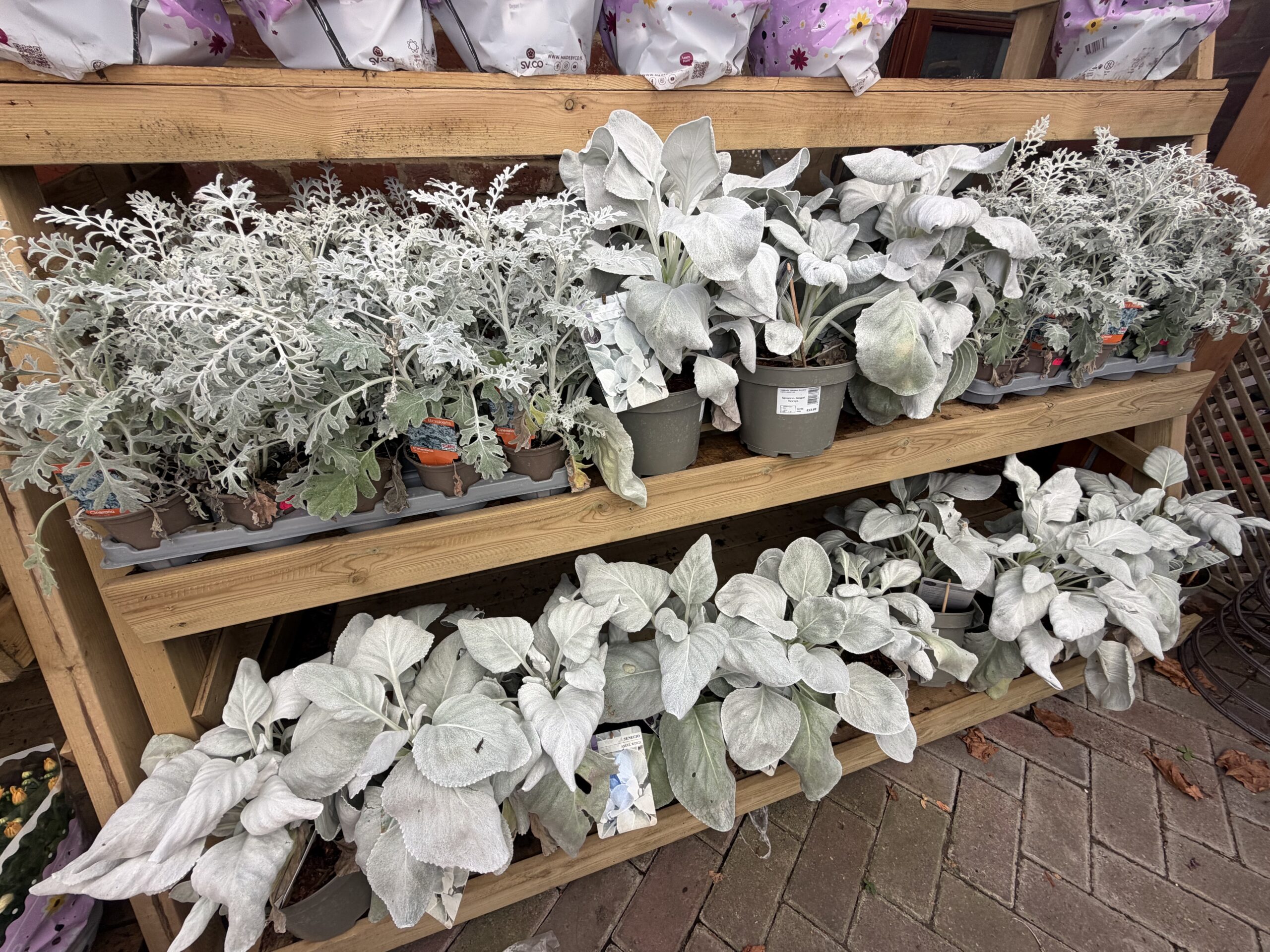
Learn how to grow and care for the Angel Wings plant, with tips on watering, winter protection and using its striking silver foliage in Christmas planters.
If you’ve spotted a plant with enormous, soft silver leaves at Hildreth’s recently (as you head towards the cafe), there’s a good chance it was Angel Wings. With its distinctive foliage and almost velvety texture, it’s a plant that makes an impression without needing a single flower.
Its silvery-white leaves bring something different to autumn and winter planting, particularly when paired with the rich greens, deep reds and natural textures we associate with Christmas. Whether you’re creating a statement planter for your front door, refreshing pots on the patio or putting together a more traditional festive plants display, Angel Wings is a useful plant to have in your mix.
It’s also a plant that deserves a place in the garden beyond Christmas. With the right growing conditions and a little attention over winter, it can provide an eye-catching feature through much of the year.
Here’s how to grow Angel Wings successfully in a UK garden and make the most of its striking foliage.
Angel Wings is often described as a perennial, but it’s worth knowing that it is not reliably hardy throughout the UK. It can struggle with prolonged frost and cold, wet conditions, so growing it in a container gives you more flexibility when winter arrives.
How to grow Angel Wings
1. Choose a sunny position
Angel Wings grows best in full sun, where its silvery foliage can develop its characteristic colour. A sunny patio, sheltered courtyard or bright position near the house is ideal.
It can tolerate some exposure, but a sheltered spot is preferable in colder parts of Buckinghamshire, particularly during winter.
2. Use free-draining soil or compost
Good drainage is essential. Angel Wings dislikes sitting in wet compost, especially during the colder months, when excess moisture can lead to root and crown rot.
When planting in a pot, choose a good-quality, free-draining compost and make sure the container has drainage holes. Adding horticultural grit or another suitable drainage amendment can help if your compost retains too much moisture.
If you’re planting directly into the garden, choose a sunny spot where the soil drains freely rather than a heavy, waterlogged area.
3. Water carefully
Water newly planted Angel Wings regularly enough to help it establish, but allow the compost to dry slightly between waterings.
Once established, the plant is relatively tolerant of short dry spells. During autumn and winter, reduce watering and always check the compost before reaching for the watering can.
One of the most common mistakes is giving Angel Wings too much water when temperatures drop. In winter, it’s generally better to keep the compost on the drier side than to leave the roots sitting in cold, wet soil.
4. Give it room to grow
Angel Wings can reach around 40cm in height and spread, forming an attractive mound of silver foliage. Allow enough space for the leaves to develop rather than crowding it between other plants.
In mixed containers, position it where its large leaves can be seen clearly. It works particularly well as a feature plant surrounded by smaller, more delicate foliage.
5. Protect it from winter weather
This is particularly important if you want to keep your Angel Wings plant for another season.
Angel Wings is generally rated H3 for UK hardiness, meaning it can tolerate some light frost in suitable conditions but may need protection in colder weather. Prolonged frost and winter wet are particular risks.
In Buckinghamshire, where winter temperatures can fall below freezing, it’s sensible to grow Angel Wings in a pot that can be moved to a sheltered, frost-protected position when necessary.
You can also protect it from prolonged rain by placing the container under a porch or other suitable cover, provided the plant still receives plenty of light.
Remove any damaged or soggy leaves as needed to keep the plant tidy.
Why Angel Wings looks so good in Christmas planters
The best festive planters aren’t necessarily the ones with the most colour. Often, it’s the contrast between different foliage shapes, textures and shades that makes a display work.
Angel Wings provides a natural focal point. Its pale, rounded leaves stand out against evergreen foliage, giving winter containers a brighter, more considered look.
Here are three ways to use it.
1. Create a classic red, green and silver display
For a traditional Christmas planter, combine Angel Wings with evergreen foliage and plants with red berries. The silver leaves lift the darker greens and give the arrangement a festive feel without relying on artificial decorations.
Add a few natural twigs for height and structure, keeping the overall planting balanced rather than overcrowded.
2. Try a more natural, understated look
If traditional Christmas colours aren’t your thing, Angel Wings also works beautifully in a more understated display.
Pair it with evergreen branches, fine ornamental grasses, pale winter foliage and natural materials such as birch twigs or pine cones. The result is a softer palette of silver, green and warm brown that looks just as good on a contemporary doorstep as it does in a country garden.
3. Use it to brighten darker foliage
One of the simplest ways to use Angel Wings is alongside darker foliage. Deep green evergreens and burgundy-leaved plants provide a strong backdrop, allowing the silver leaves to stand out.
This approach works particularly well in larger containers, where the contrast can be appreciated from a distance. It also means the planter can continue to look attractive well beyond the Christmas period.
A practical tip: If you’re using Angel Wings in a festive container that will remain outdoors, choose companions suited to winter conditions and make sure the container drains freely. Remember that Angel Wings itself may need moving under cover if frost is forecast.
How to care for Angel Wings after Christmas
Once the Christmas decorations come down, there’s no reason to discard your Angel Wings plant if it’s still healthy.
Check the foliage and remove any leaves damaged by cold or excessive moisture. If the plant has been kept in a sheltered position, gradually return it to its usual sunny spot when conditions improve.
Continue to water according to the weather and the condition of the compost, rather than following a fixed schedule. As growth picks up in spring, you can resume more regular watering and consider a light feed if needed.
Angel Wings can be propagated from cuttings or by division, although the success of either method will depend on the health and maturity of the plant.
If your plant has suffered significant frost damage, wait until the worst of the cold has passed before assessing whether it will recover.
Is Angel Wings a good plant for beginners?
Yes, provided you understand its main requirements. Angel Wings is relatively straightforward to grow when given plenty of sunshine, free-draining compost and careful watering.
The biggest challenge is winter protection. If you want a plant that can be left outside in a pot throughout every UK winter, Angel Wings may not be the most reliable choice. If you’re happy to move it somewhere sheltered during cold spells, however, it can reward you with striking foliage that works across several seasons.
It’s particularly useful for gardeners who enjoy creating their own seasonal containers and want something a little different from the usual winter bedding plants.
Find inspiration for seasonal planting at Hildreth’s Garden Centre!
Angel Wings is a good example of how much impact foliage can have in a garden. Its unusual silver leaves bring contrast to winter containers, complement traditional Christmas colours and provide interest long after many summer flowers have disappeared.
If you’re planning your own festive planter this year, think about combining different foliage colours and shapes rather than relying on flowers alone. A single statement plant, a few well-chosen evergreens and some natural decorative touches can be all you need.
Visit Hildreth’s Garden Centre in Prestwood, Buckinghamshire, for seasonal gardening inspiration, plants and containers. Our team can help you choose plants and accessories for your outdoor space, whether you’re refreshing a doorstep planter or creating a larger winter display.
Are you following us on social yet? Catch more news and tips there! And don’t forget to sign up to our monthly newsletter and follow our socials for more news and offers.
Follow us on Instagram @hildreths.garden.centre on Facebook @Hildreths Garden Centre and TikTok @hildreths.gc
Shop our BBQs and premium garden furniture online at www.garden-space.co.uk
If you have time, please leave us a Google Review here. We’re independent and family-run so we’d really appreciate it.