
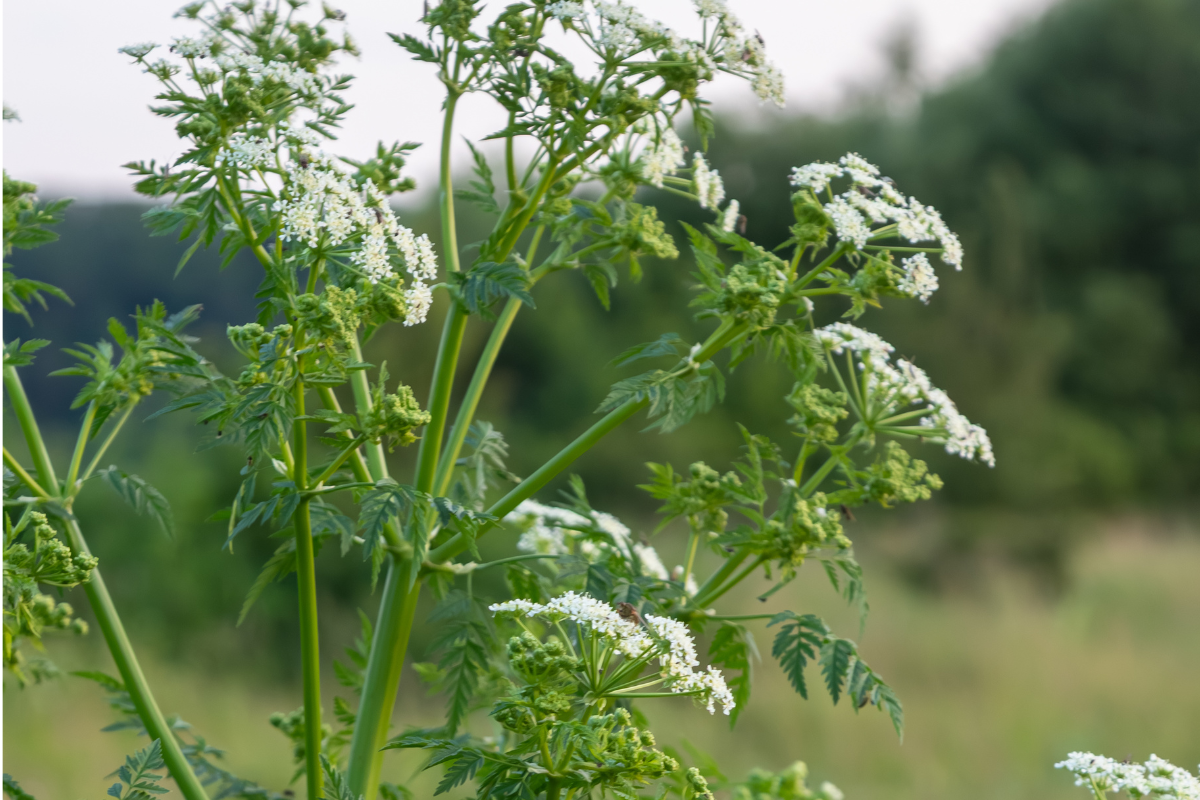
Poison hemlock has been making headlines this summer. Learn how to identify this toxic plant, where it grows, how to tell it apart from similar species and what to do if you find it in your garden.
If you’ve been scrolling through social media recently, you’ve probably seen alarming posts warning about poison hemlock. As Britain’s tallest and most notorious poisonous wild plant comes into flower during June and July, it’s been making headlines across the UK, with councils, gardeners and countryside groups urging people to learn how to recognise it.
The sudden attention has led many gardeners to wonder: Could poison hemlock be growing in my garden?
The answer is reassuring. Although poison hemlock (Conium maculatum) is a native wild plant found throughout the UK, it is far more common in hedgerows, roadside verges, riverbanks and neglected areas than in well-maintained gardens. However, it can occasionally self-seed into uncultivated corners, so it’s worth knowing what to look for.
What is poison hemlock?
Poison hemlock is a biennial member of the carrot family (Apiaceae). Every part of the plant contains toxic alkaloids, making it poisonous if eaten by people, dogs, cats, horses and livestock.
The greatest risk comes from ingesting the plant. Simply brushing against it isn’t usually harmful, although some people may experience skin irritation from the sap. As with any unfamiliar wild plant, it’s best to avoid handling it unnecessarily.
How to identify poison hemlock
The easiest way to identify poison hemlock is by looking for a combination of these distinctive features:
Purple-blotched stems – This is the biggest giveaway. Poison hemlock has smooth, hollow green stems covered in irregular purple or reddish blotches. Unlike many similar plants, the stems are almost hairless.
Tall growth – Mature plants can reach 1.5–3 metres (5–10 feet), often standing well above surrounding vegetation.
Fern-like leaves – The bright green leaves are finely divided and lacy, giving them a fern or parsley-like appearance.
White umbrella-shaped flowers – During early and mid-summer, poison hemlock produces large clusters of tiny white flowers arranged in umbrella-shaped heads known as umbels.
An unpleasant smell – Crushing the leaves releases a strong musty odour rather than the fresh scent associated with edible herbs such as parsley.
Where is poison hemlock most likely to grow?
Although it occasionally appears in gardens, poison hemlock prefers damp, undisturbed ground. If your borders are regularly cultivated and weeded, it’s much less likely to become established.
You’re most likely to find it:
- Along hedgerows
- Beside streams and rivers
- On roadside verges
- Around field margins
- In waste ground
- In neglected corners of larger gardens
Which plants look simliar
One reason poison hemlock causes confusion is that it belongs to the same family as several attractive and harmless plants.
It is often mistaken for:
- Cow parsley
- Wild carrot (Queen Anne’s Lace)
- Sweet cicely
- Angelica
- Fennel
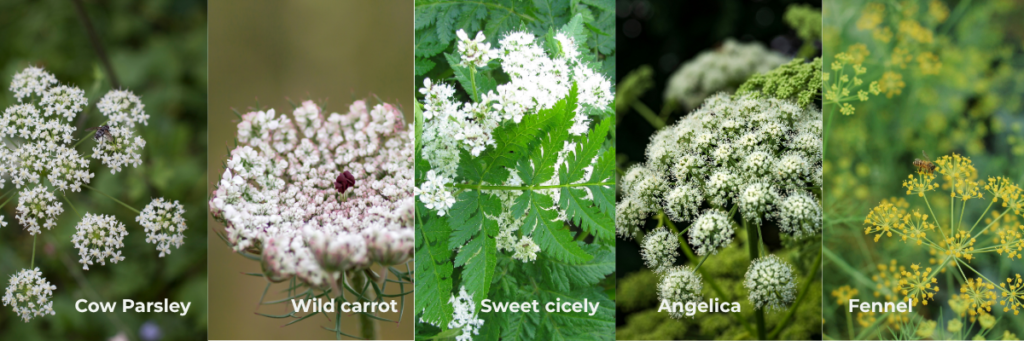
These plants are valuable for wildlife and, in some cases, edible, so it’s important not to remove them simply because they have white flowers. The purple-blotched stem is the clearest way to distinguish poison hemlock from its lookalikes.
What should you do if you find poison hemlock?
If you’re confident you’ve identified poison hemlock:
- Wear sturdy gardening gloves.
- Avoid strimming or mowing mature plants, as this can scatter seeds and spray sap.
- Carefully dig out the whole plant, including the root if possible.
- Place it in a sealed garden waste bag.
- Wash your hands and any tools thoroughly afterwards.
Avoid composting or burning the plant.
If you’re unsure whether you’ve found poison hemlock, don’t guess. Take clear photographs and bring them into Hildreth’s Garden Centre, where our experienced team will be happy to help identify it.
Are you following us on social yet? Catch more news and tips there! And don’t forget to sign up to our monthly newsletter and follow our socials for more news and offers.
Follow us on Instagram @hildreths.garden.centre on Facebook @Hildreths Garden Centre and TikTok @hildreths.gc
Shop our BBQs and premium garden furniture online at www.garden-space.co.uk
If you have time, please leave us a Google Review here. We’re independent and family-run so we’d really appreciate it.