
Discover the story behind William Morris, from his love of nature and traditional craftsmanship to the iconic designs still loved today.
There are some patterns that never really seem to go out of fashion. William Morris’s are certainly among them.
With their twisting leaves, flowers, birds and rich, intricate colours, Morris designs have a way of feeling both wonderfully traditional and surprisingly at home in modern interiors. You may recognise the familiar patterns from wallpaper, fabrics and homeware, but there is much more to William Morris than simply beautiful prints.
His designs came from a much bigger idea about how things should be made, how we live with them and the importance of surrounding ourselves with things that are both useful and beautiful.
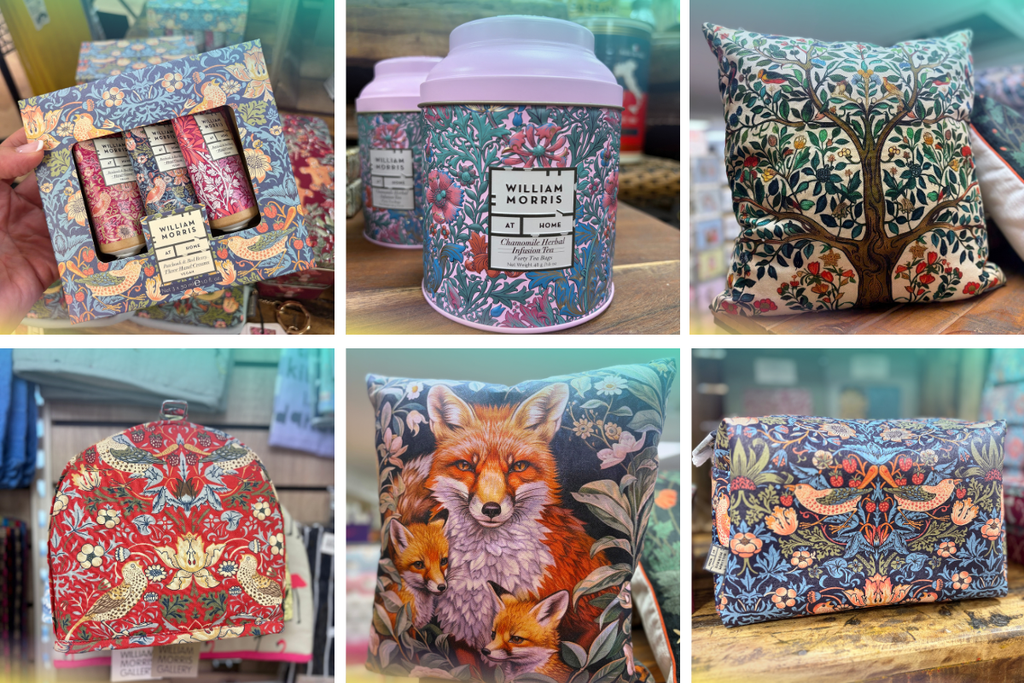
At Hildreth’s Garden Centre, we love that connection between nature, craftsmanship and the home. That’s why we’re pleased to stock a selection of William Morris products in our Gift Shop – bringing a little piece of this fascinating design heritage into everyday life.
Who was William Morris?
William Morris was born in Walthamstow in 1834 and became one of the most influential designers of the Victorian era. But calling him simply a designer doesn’t really do him justice. He was a poet, writer, publisher, political activist and craftsman, as well as a designer. He was also one of the key figures associated with what became known as the Arts and Crafts movement.
Morris grew increasingly frustrated with the mass-produced goods of the Victorian industrial age. He believed that objects could – and should – be beautifully made, with care given to both their design and the way they were produced.
His approach was quite different from the increasingly industrial world around him. Rather than embracing the idea that machines could simply produce more, faster and cheaper, Morris looked back to traditional craftsmanship and historical techniques for inspiration. That philosophy became central to his work.
The Arts and Crafts movement
The Arts and Crafts movement developed in Britain in response to many of the changes brought about by industrialisation. Its supporters valued craftsmanship, traditional skills and good design, and William Morris became one of its most influential figures.
For Morris, inspiration was often found much closer to home than you might expect. He loved the natural world and spent much of his childhood exploring the countryside around his home in Essex. Plants, flowers, birds and the changing seasons would become recurring themes throughout his work.
He also looked to the past, studying medieval manuscripts, textiles, tapestries and decorative arts. Rather than simply copying historical designs, he took ideas from them and reworked them into something that felt fresh and distinctly his own.
This combination of nature, history and craftsmanship is a large part of what makes Morris’s designs so instantly recognisable today.
From wallpaper to textiles
Morris’s first wallpaper design, Daisy, appeared in 1864. It was inspired by the flowers and natural forms he saw around him, combined with influences from historical textiles and manuscripts.
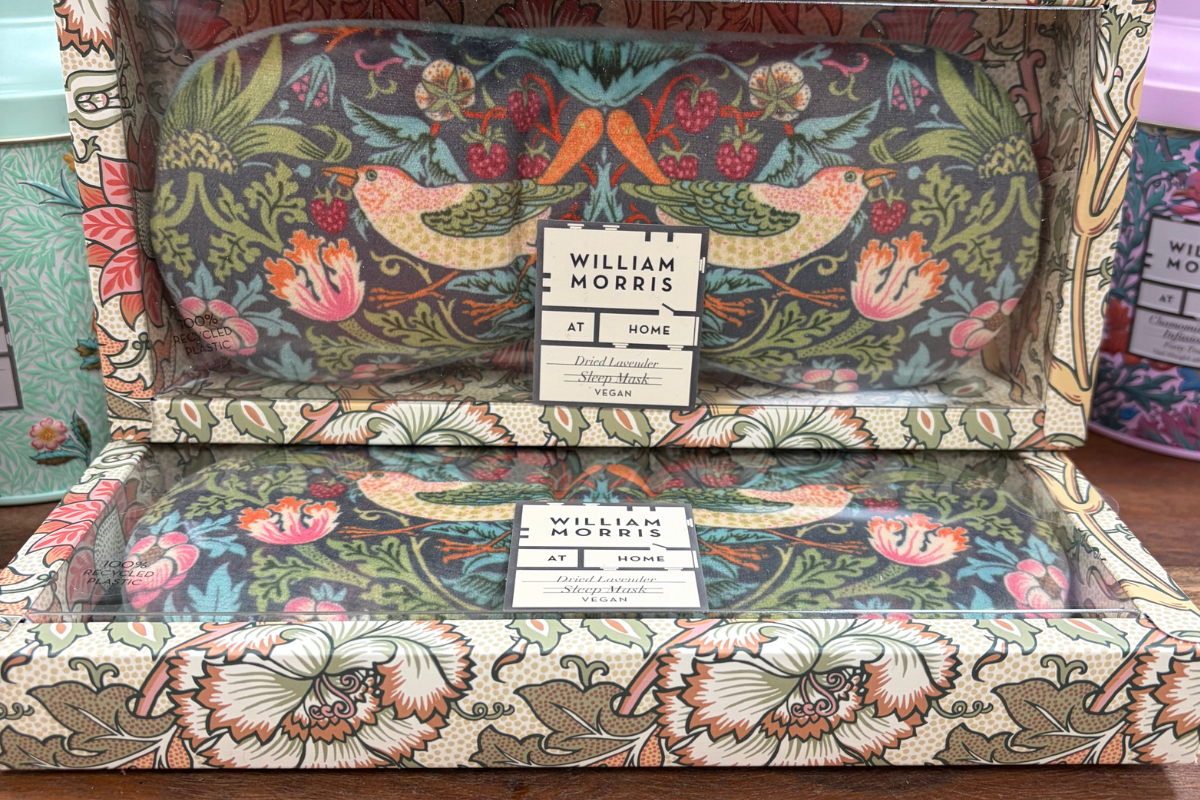
Over the following decades, he produced a remarkable range of patterns for wallpaper and textiles. Designs such as Strawberry Thief, Willow Bough and Acanthus have since become classics of British design. But there was considerable work behind these seemingly effortless patterns.
Morris was fascinated by the processes involved in making things. He researched historic printing and dyeing techniques and became particularly interested in natural dyes. He even established workshops at Merton Abbey Mills in south London, where he could bring different aspects of production together and have greater control over how his designs were made.
So when you look at a William Morris pattern, you’re not just looking at a pretty floral design. You’re seeing the result of years of experimentation, research and an almost obsessive attention to detail.
Why are William Morris designs still so popular?
Perhaps the simplest answer is that they have never really stopped feeling relevant. And they are gorgeous, of course! Morris didn’t draw flowers as botanical illustrations. Instead, he created patterns that capture the movement and abundance of nature – leaves overlap, stems twist, birds appear amongst foliage and flowers repeat across the design. There is a sense of life and movement in them.
And although many of the original designs date back to the 19th century, the natural subject matter means they continue to work beautifully in contemporary homes.
There is also something comforting about their connection to the countryside. At a time when so much of everyday life can feel digital and fast-moving, perhaps we’re still drawn to the same things Morris valued: nature, craftsmanship and objects made to be enjoyed for years rather than thrown away.
The V&A, which holds one of the world’s largest collections of Morris’s work, describes his designs as helping to introduce a new naturalism into Victorian pattern design. His influence can still be seen across interiors and decorative design today.
A little piece of Morris at Hildreth’s
You don’t need to decorate your entire home in Arts and Crafts style to enjoy William Morris. Sometimes a small detail is enough – a beautiful piece of homeware, stationery, a gift or something simply chosen because you love the pattern.
That’s part of the appeal of the William Morris collection in our Gift Shop at Hildreth’s. His designs lend themselves perfectly to gifts, combining a recognisable piece of British design history with something that can be enjoyed every day. And, of course, there is something rather fitting about discovering William Morris designs at a garden centre!
So much of his work began with looking closely at the natural world: the flowers in hedgerows, the leaves and branches, birds and the rhythm of a garden. His patterns may have been created more than 100 years ago, but the inspiration behind them is still all around us.
If you’re a fan of William Morris, or simply looking for a gift with a little more history behind it, take a look at the William Morris collection that Sara has curate in our Gift Shop next time you’re visiting Hildreth’s – you’ll find it above our Hardware shop. And we have a lift to make visiting even easier!
From familiar floral patterns to beautifully designed gifts for the home, there’s something rather special about giving a present that has a story behind it.
And perhaps that’s the enduring appeal of William Morris.
He believed that beautiful things were worth making properly – and worth living with.
Are you following us on social yet? Catch more news and tips there! And don’t forget to sign up to our monthly newsletter and follow our socials for more news and offers.
Follow us on Instagram @hildreths.garden.centre on Facebook @Hildreths Garden Centre and TikTok @hildreths.gc
Shop our BBQs and premium garden furniture online at www.garden-space.co.uk
If you have time, please leave us a Google Review here. We’re independent and family-run so we’d really appreciate it.